Open storage and IOS finance
Funding for secured surfaced yards used for containers, HGV parking and outdoor storage, an emerging institutional class with very low capex.

Funding open storage and ios
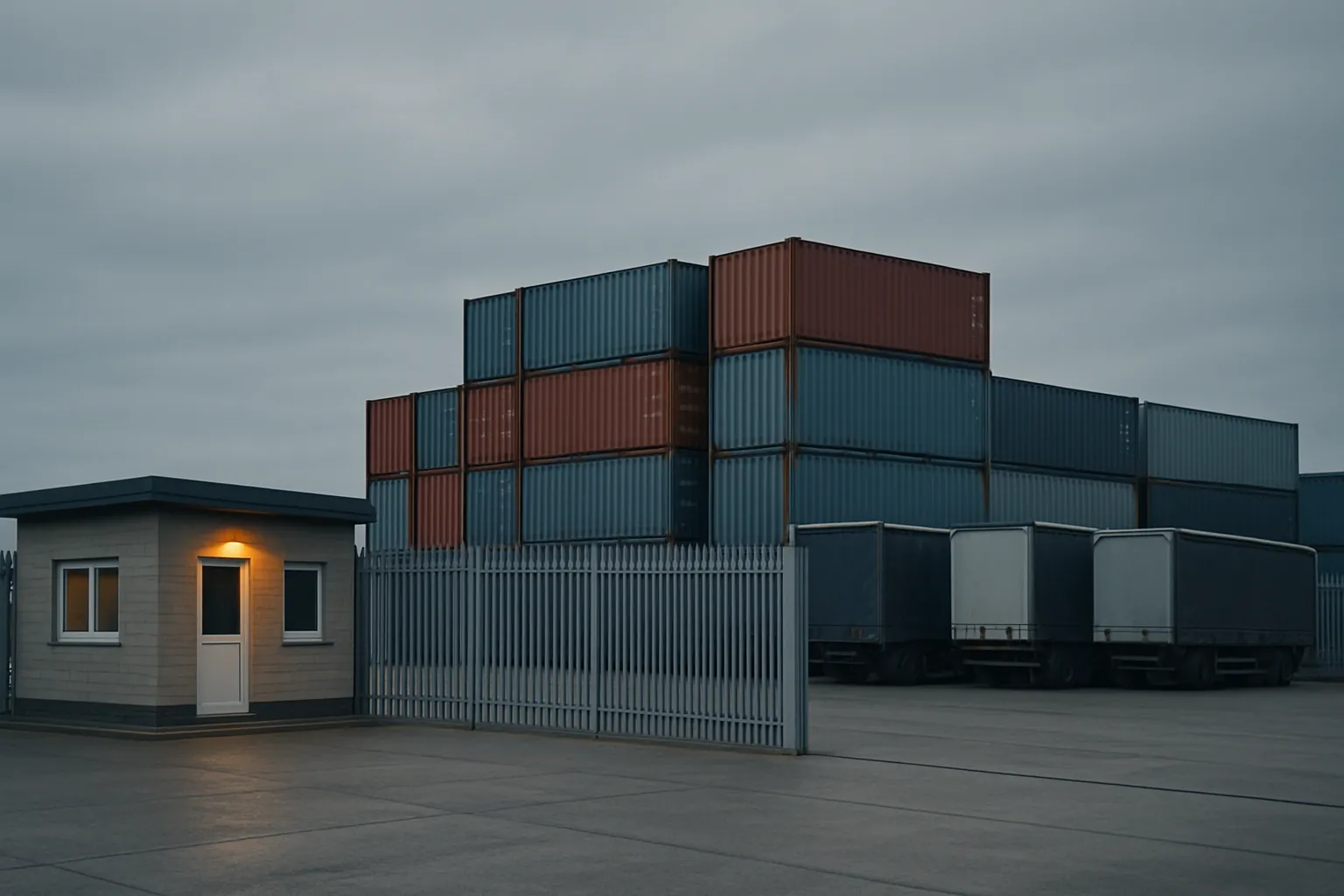
Open storage and industrial outdoor storage, often shortened to IOS, are secured surfaced yards rather than buildings, used for container storage, HGV and trailer parking, plant and equipment, and the outdoor needs of logistics and construction operators. They are an increasingly recognised institutional class that sits alongside the conventional industrial unit.
The appeal is simplicity. With little or no building to maintain, capital expenditure is very low, and income comes from leasing surfaced, fenced and serviced land in well located positions near ports, terminals and the road network. Scarcity of suitable land near these nodes supports both demand and the loan to value (LTV) lenders will advance on a commercial mortgage secured against the site.
What we fund
- Secured, surfaced and fenced industrial yards
- Container storage and stacking areas
- HGV, trailer and plant parking and storage
- Sites near ports, rail terminals and motorway junctions
- Very low building content and very low capital expenditure
Indicative terms
- Typical lot size£1m to £30m
- Purchase LTVUp to ~65%
- Development LTCUp to ~60% for site works
- Typical lease / incomeFlexible to medium-term land leases
Indicative only. Terms vary by lender, asset and borrower and are not an offer of finance.
Commercial mortgages for open storage and IOS sites
We arrange a purchase or investment commercial mortgage against income-producing yards, with debt sized off the leases, the underlying land value and the loan to value the lender will set. For sites being cleared, surfaced, fenced and serviced we source development style facilities for the works, which are modest compared with building a warehouse. Where land is bought ahead of fit-out or change of use we arrange bridging, then move clients onto a term commercial mortgage once the yard is let and producing stable income. We act as arranger and introducer, not as a lender.
How lenders underwrite open storage land
Lender appetite for IOS is growing as the class gains institutional recognition, though it remains newer than a mainstream industrial unit. Underwriting leans on the underlying land value, the planning and lawful use position for open storage, and the quality and length of the income, since there is little building to fall back on. Lenders value the very low capital expenditure and the scarcity of consented sites near key transport nodes when setting loan to value, while testing that the permitted use and lease structure are secure.
The open storage and IOS market
Open storage and IOS does not have a current standalone published rent or yield series, so we keep market commentary for this class general and note that no standalone rent or yield data exists for the specific format. It draws on the same demand drivers as the wider logistics market, where take-up ran at around 40.8m sq ft on a 50,000 sq ft and above basis in 2025 per Knight Frank and development completions fell to around 16m sq ft, the lowest since 2018 per Knight Frank. That scarcity of land and built space, alongside prime distribution yields of 5.00 to 5.25 percent in December 2025 per Knight Frank, frames the broader market that IOS sits within.
Finance that suits this asset class
- Purchase and investment financeBuying income-producing yards on land and lease value.
- Bridging financeSecuring land ahead of fit-out or change of use.
- Development financeClearing, surfacing, fencing and servicing the site.
- Term loansLonger hold debt once the yard produces stable income.
Useful calculators
Fund a open storage and ios deal
A view on fundability within one working day.
How much can you borrow against open storage and IOS land?
Borrowing on an income-producing open storage or IOS site is sized off the leases, the underlying land value and the loan to value (LTV) a lender will set, rather than a building. We typically arrange a commercial mortgage up to around 65 percent loan to value, with lenders relying on the land value, the lawful use for storage and the strength of the income.
The very low building content means there is little plant or structure to fall back on, so lenders lean on the land and the permitted use when sizing the loan. The scarcity of consented sites near ports, rail terminals and motorway junctions supports both demand and value. We structure the loan for an investor landlord or an owner-occupier, sized against the leases and the land the income sits on.
Because the class is newer than mainstream sheds, matching the deal to a lender that understands open storage is part of the work. A funder comfortable with land-led security will look at the lawful use, the income and the location rather than expecting a building to lean on, which is often what allows an income-producing yard to reach a sensible loan to value on a commercial mortgage.
What makes open storage different to underwrite?
Open storage and IOS sites are secured, surfaced and fenced yards rather than buildings, so underwriting differs from a conventional industrial unit. With little or no structure, lenders lean on the underlying land value, the planning and lawful use position for open storage, and the quality and length of the income, since there is no building to provide residual security.
The class is increasingly recognised by institutions but remains newer than mainstream sheds, so the group of lenders comfortable with it, while growing, is narrower. They value the very low capital expenditure and the scarcity of consented land near key transport nodes when setting loan to value, while testing that the permitted use and the lease structure are secure enough to support the income over the term.
Because the value rests on the land and its consented use, the planning position carries more weight here than on a building-led asset. A site with an established lawful use for open storage and a clear title reads far more favourably than one where the use is uncertain, and that distinction often shapes both the appetite to lend and the loan to value a lender will set.
Can you finance land with little or no building on it?
Yes. We arrange a commercial mortgage against income-producing open storage yards where the security is the land and its lawful use rather than a structure. Lenders rely on the land value, the planning position for storage and the strength of the leases, and they value the very low capital expenditure that comes with having little building to maintain.
For sites being cleared, surfaced, fenced and serviced we source development style facilities for the works, which are modest compared with constructing a warehouse. Where land is bought ahead of fit-out or a change of use we arrange bridging to secure it, then move clients onto a term commercial mortgage once the yard is let and producing stable income.
The low works cost is part of the appeal, since surfacing and fencing a yard is far cheaper and quicker than putting up a building. That keeps the capital at risk during the works modest, which lenders read favourably, and it means a site can move from bare land to income-producing yard relatively quickly before the term commercial mortgage goes in place.
The flexibility of the income is part of the picture too. Open storage and IOS leases are often shorter or more flexible than those on a let warehouse, which suits operators that need land at short notice but means lenders look closely at the quality and continuity of the income. We present the lease structure and the lawful use together so the loan to value reflects a realistic read of the land and the income it produces.
Can you refinance or remortgage an IOS site?
Yes. We refinance income-producing open storage yards onto a new investment commercial mortgage or term loan once the site produces stable income, commonly to release equity, fix a rate or replace a maturing facility. The loan to value is reset against the current rent and the land value, so a site where lettings have firmed up the income can support a larger advance than at purchase.
Where a site has just been surfaced, fenced and let, timing a refinance after the income stabilises often improves the loan to value available, as the growing institutional recognition of the class supports the value the loan is sized against. Lenders continue to focus on the lawful use and the lease structure at refinance.
Is an IOS site better held as an investment or owner-occupied?
Both routes are seen, and the right one depends on the client. A logistics or construction operator may buy a yard to use itself, holding the land as a long-term asset and servicing an owner-occupier commercial mortgage from its trading cash flow. With little or no building to maintain, the very low capital expenditure means the running cost of owning the site is modest, which suits an operator that needs secure, well located land near ports or the road network.
For a landlord, an income-producing yard is an investment sized on the leases and the underlying land value, with rental income covering the debt. Either way lenders rely on the land and its lawful use for storage rather than a structure, so they focus on the planning position and the strength of the income when setting the loan to value.
Open storage and IOS has no standalone published rent or yield series, so we underwrite each site on its land, lawful use and leases rather than headline logistics benchmarks. We arrange owner-occupier mortgages for operators buying their own yard and investment mortgages for landlords holding let land, structuring each to suit how the site is held.
Worked example: secured container and HGV yard
Take an illustrative purchase of a secured, surfaced IOS yard near a port, used for container storage and HGV parking, let on flexible land leases and priced at £6m. At 60 percent loan to value the commercial mortgage would be around £3.6m, with the investor funding a deposit of roughly £2.4m. The figures are illustrative only and a real facility would be sized on the land value, lawful use and leases.
Because the security is the land and its lawful use for storage rather than a building, the rate would reflect the newer status of the class and the focus on the planning position, on a term of around five years. The very low capital expenditure means more of the rental income flows through to cover interest, and lenders test that the permitted use is secure. There is no standalone published rent or yield series for IOS, so the lender underwrites this off the land and the leases rather than a headline logistics benchmark.
Now take a bare site bought for £4m to be cleared, surfaced, fenced and serviced. A modest development style facility would fund the works, which are small compared with building a warehouse, often advanced at up to around 60 percent loan to cost. Once the yard is surfaced and let, the client refinances onto a term commercial mortgage against the income.
Once the leases firm up the income, the investor could remortgage onto a fresh term loan at a higher value, releasing equity, or sell into a market where institutional recognition of IOS continues to grow. Scarcity of consented sites near ports, rail terminals and motorway junctions supports the value either route is sized against.
To sketch the cash position, on the £6m purchase the investor holds around £2.4m of equity at the outset against the £3.6m loan. As the yard's leases settle and the income proves itself, a refinance at a firmer loan to value on a higher land value could release some of that equity, with the figure set by the strength of the leases, the lawful use and the appetite of lenders for the class at that point rather than a published yield series.
Illustrative worked example only. Figures vary by lender, asset and borrower and are not an offer of finance.
Frequently asked questions
Can you get a mortgage on open storage or IOS land?
Yes. An income-producing open storage or IOS site can be financed with a commercial mortgage, typically up to around 65 percent loan to value (LTV). Lenders rely on the land value, the lawful use for storage and the strength of the leases rather than a building, and they value the very low capital expenditure, structuring the loan for an investor landlord or an owner-occupier.
Can I finance land with little or no building on it?
Yes. We arrange a commercial mortgage against income-producing open storage yards, where lenders rely on the land value, the lawful use for storage and the strength of the leases rather than a building, and they value the very low capital expenditure.
What do lenders check on an IOS site?
Lenders focus on the planning and lawful use position for open storage, the underlying land value and the quality and length of the income when setting loan to value, since there is little building to fall back on if the income fails.
Why is capital expenditure so low on open storage and IOS?
An open storage or IOS site is a secured, surfaced and fenced yard rather than a building, so there is little structure or plant to maintain, repair or eventually replace. That keeps capital expenditure very low compared with a warehouse, which means more of the rental income flows through to cover interest. Lenders value that low capex and the scarcity of consented land near ports and transport nodes when setting the loan to value.
Funding a open storage and ios asset?
Tell us about the deal and we will come back with a view on fundability and likely terms.