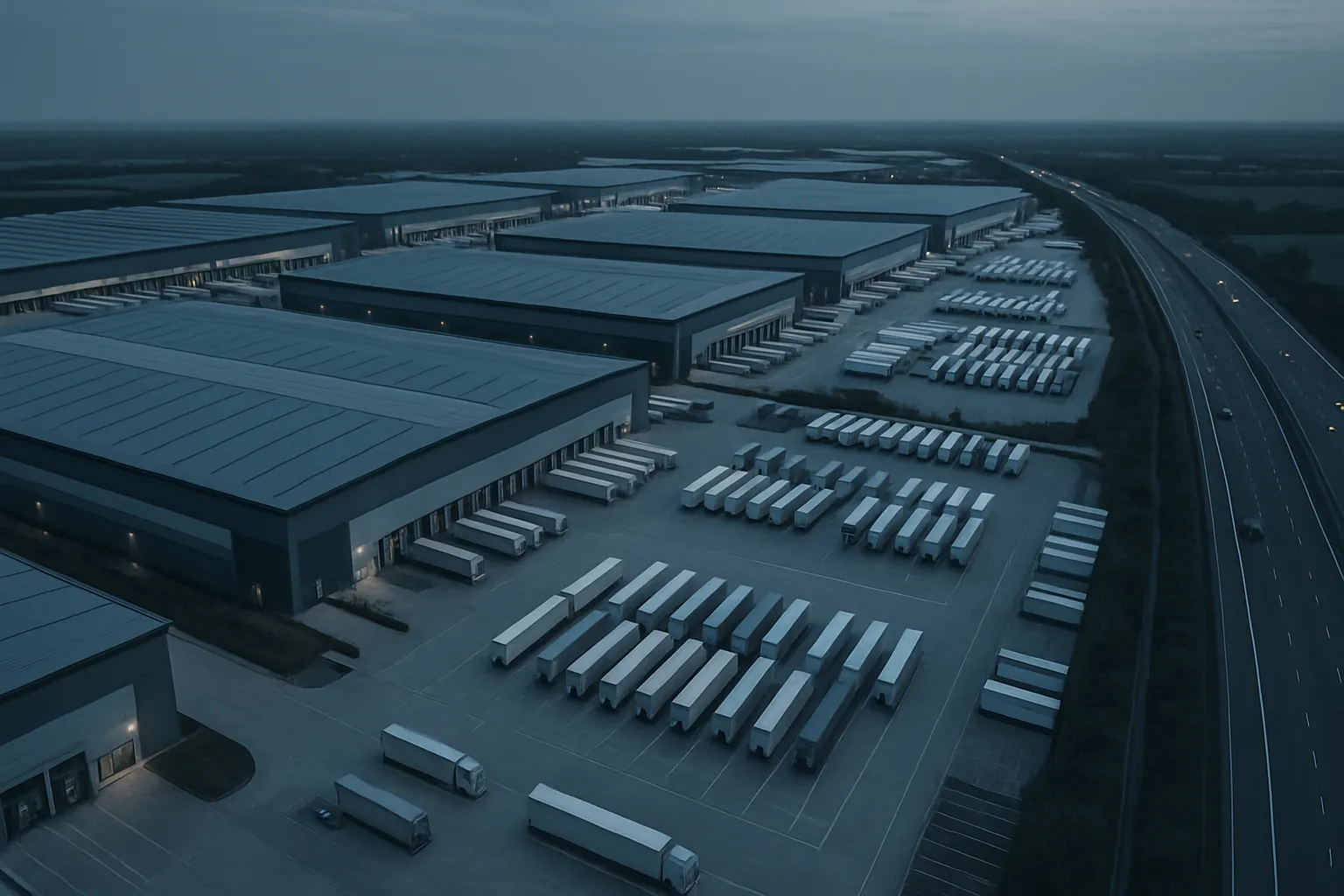
How to buy a warehouse
A warehouse is a commercial property used for storage and distribution, and buying one is one of the more straightforward routes into commercial property owners

A warehouse is a commercial property used for storage and distribution, and buying one is one of the more straightforward routes into commercial property ownership, whether you trade from the building yourself or hold it as an investment let to a tenant. Demand for warehouse and industrial space in the UK has been strong for years, driven by online retail and the need for distribution close to towns and cities, and that demand has kept values and rents firm. This guide walks through how to buy a warehouse from first search to completion, and how to fund the purchase. We arrange the finance behind these deals as an introducer rather than a lender, so we see how buyers actually get warehouse purchases over the line.
Buying a warehouse is a different exercise from buying a home. The building is judged on what it can do, its size, its eaves height, its access and its location, rather than on how it looks. The money behind it usually comes from a commercial mortgage at a commercial rate, and the legal and survey work is more detailed. We have written this guide for first-time buyers and for businesses outgrowing rented space, covering whether a warehouse is worth buying, how much you need to start, how to value and inspect a building, how the purchase works and how to finance it.
Why buy a warehouse in the first place?
There are two reasons people buy a warehouse, and your reason shapes every later decision. The first is to occupy it: your own business needs space to store stock, run logistics or manufacture, and owning the building fixes that cost rather than paying rent that rises every few years. At the end of a mortgage term you own a valuable asset outright, and the monthly repayment is often similar to the rent it replaces. For a settled, growing business in a location it wants to stay in, owning the warehouse it operates from is frequently a sound long-term decision.
The second reason is investment. Here you buy a warehouse to let to a tenant and earn rental income, with the prospect of the building rising in value over time. UK industrial property has been a favoured asset class because rents have grown and demand has outstripped supply in many areas. Prime big-box rent reached around 11.90 pounds per square foot, according to Colliers in June 2025, which gives a sense of the income a good unit can produce. Investors judge a warehouse purchase on its yield, the annual rent expressed as a percentage of the price paid.
Either way, the warehouse market has been active. Take-up reached around 40.8 million square feet in 2025 on a 50,000 square feet and above basis, according to Knight Frank, which signals healthy occupier demand for larger distribution space. That demand supports both occupier and investor cases, because a building that is easy to let is easy to value and easy to fund. Knowing which of the two games you are playing, occupation or investment, tells you what size, location and condition of warehouse to look for.
How much money do you need to buy a warehouse?
The headline figure is the deposit. Most lenders fund a warehouse purchase at sixty to seventy-five percent loan to value, so you contribute twenty-five to forty percent of the price in cash. On a small warehouse at three hundred thousand pounds that is roughly seventy-five to one hundred and twenty thousand pounds of your own money, with the balance covered by a commercial mortgage. Owner-occupiers buying a unit their own trading business will use can sometimes borrow a little more, because the lender takes comfort from the business behind the purchase.
Beyond the deposit there is a stack of transaction costs that buyers often underestimate. Stamp duty land tax applies to commercial property and rises with the price. A lender charges an arrangement fee, commonly one to two percent of the loan, and you pay for a valuation, for your own legal work and for the lender's. There may be a building survey, a measured survey and environmental checks on an industrial site. We model the full cost with you at the start, because the true cash needed to buy a warehouse is always more than the deposit alone.
There is no single minimum to start, but as a realistic rule a small warehouse purchase needs a six-figure sum of available cash once the deposit, fees, tax and survey costs are added together. If that is beyond reach today, there are routes worth exploring: a higher loan to value where the trading business is strong, additional security from another property, or a short bridging facility to assemble the funds, repaid once the commercial mortgage completes. The point is to know the number precisely before you start viewing buildings.
How do you find the right warehouse to buy?
Start with a clear specification, because a warehouse is bought on function. Decide the floor area you need in square feet, the eaves height required for racking or machinery, the access you need for the size of vehicle that will deliver, the power supply, the parking and yard space, and the location relative to your customers or to the motorway network. A unit that suits a fast-moving logistics operation looks very different from one that suits light manufacturing, so write the brief before you browse the listings.
Warehouses are advertised on the major commercial portals and through local commercial agents, and the best units, particularly smaller freehold ones, often go quickly or sell off-market through agents who know who is looking. Registering your requirement with two or three active industrial agents in your target area is usually more productive than refreshing a portal, because they hear about stock first. Some buyers also look at auctions, where vacant or older industrial units appear, though these demand fast funding and careful checks.
When you find a candidate, look past the asking price to the building's adaptability and re-lettability. A modern warehouse with good height, level access and a strong location holds its value and is easy to fund. An older unit in a weak location, or one so specialised that only one type of occupier could use it, may be cheaper but harder to value, harder to finance and harder to sell later. The valuation a lender commissions will reflect exactly these factors, so it pays to think like a valuer while you search.
What checks and valuation does a warehouse need?
Before you commit, a warehouse needs proper due diligence, more than a home would. A building survey checks the structure, the roof, which on an industrial unit is a common source of expensive problems, the cladding, the floor loading and the condition of doors and loading bays. A measured survey confirms the actual floor area, because asking particulars are not always accurate and you are paying by the square foot. On industrial sites an environmental check matters, since past uses can leave contamination that is costly to deal with and that a lender will ask about.
Planning and use are central. Confirm the planning use of the building allows what you intend to do, and check for any restrictions, conditions or rights of way that could limit your operation. If you plan to extend, add mezzanine floors or change the use, take planning advice early rather than after exchange. Your solicitor will also review the title, any service charges on an estate, and on an investment purchase the lease and the covenant strength of the tenant who pays the rent.
The lender's valuation sits on top of all this. A surveyor inspects the warehouse and reports its market value, and for an investment case its rental value, and the loan is a percentage of that valuation figure rather than of the price you agreed. If the valuation comes in below the agreed price the loan shrinks and your deposit grows, so we choose lenders whose valuers understand the local industrial market and we manage the figure realistically with you. A sound valuation is what turns an agreed purchase into a funded one.
How does the warehouse purchase process work step by step?
The sequence runs from offer to completion in clear stages. You agree a price with the seller, usually subject to survey and finance. We arrange an agreement in principle from a lender so the seller knows your funding is real, which strengthens your position. Solicitors are instructed on both sides, your survey and the lender's valuation are commissioned, and the legal due diligence on title, planning and any lease begins. This investigation stage is where most of the time goes on a warehouse, and where problems are best found.
Once the survey and valuation are satisfactory and the legal work is clear, the lender issues a formal mortgage offer. Contracts are then exchanged, at which point the purchase becomes binding and a deposit is committed, and a completion date is set. On completion the balance of funds, your cash plus the commercial mortgage advance, passes to the seller, the legal charge is registered and the keys are handed over. Stamp duty is paid shortly after. From agreed offer to completion a warehouse purchase commonly takes eight to twelve weeks.
Where speed is essential, for example a warehouse bought at auction with a twenty-eight day completion deadline, the standard timetable does not fit. In that situation a bridging facility can complete the purchase fast, securing the building, and a commercial mortgage is then arranged at a normal pace to repay the bridge. We plan that two-step funding from the outset so the deadline is met without overpaying for short-term money longer than necessary.
How do you finance a warehouse purchase?
Most warehouse purchases are funded by a commercial mortgage, a loan secured on the property and repaid over a term of typically fifteen to twenty-five years. The lender advances a percentage of the warehouse valuation and you supply the rest as deposit. The rate is usually set as a margin over the Bank of England base rate or a swap rate, so it moves with the wider market, and the exact rate you are offered reflects the loan to value, the quality of the building and the strength of the business or rental income behind the purchase.
You choose between repayment and interest-only. A repayment loan clears interest and a slice of capital each month so you own the warehouse outright at the end of the term, which suits owner-occupiers who intend to stay. Interest-only keeps the monthly payment lower by covering only the interest at the agreed rate, leaving the balance to be repaid at the end through sale or refinance, which many investors prefer to protect rental cash flow. The right choice depends on whether you are buying the building to use or to hold for income.
Our role is to read the market and place your case with the lender most likely to fund the warehouse on a good rate, rather than you applying blind to a single bank. We know which lenders are funding industrial property keenly, which move quickly and which will consider a less standard unit or a complex trading history. Because we are an introducer and not a lender, we widen the field of lenders you reach. Where you are buying personally and the loan touches your own home, we also flag whether the lending is regulated, which affects who can act.
Is buying a warehouse worth it?
For the right buyer, owning a warehouse can be very worthwhile. An occupier converts rent into ownership of an appreciating asset and fixes a major cost against future increases, and an investor earns rental income with the prospect of capital growth, in a sector where demand has consistently outpaced supply. With prime industrial yields holding broadly stable at around 5.00 to 5.25 percent, according to Knight Frank in December 2025, the income from a well-let warehouse is both attractive and reasonably predictable, which is exactly what makes the asset class popular.
It is not automatically the right move, though. Owning ties up a large deposit and a stack of fees, the building needs maintenance, and an empty warehouse with no tenant still costs you in business rates and finance. If your business might relocate soon, or you cannot evidence the income to support the borrowing, renting may serve you better for now. The decision turns on how long you intend to hold the building and how confident you are in the location, not on the headline price alone.
We help you weigh it honestly. We model the cost of owning against renting, we test the deposit and fees against your cash, and we run the likely rental yield or the saving against your current rent so the numbers are in front of you. Because we earn nothing from talking you into a purchase, our interest is simply that the warehouse and its funding fit your plans. Buying a warehouse is worth it when the building suits the business and the finance is comfortable, and our job is to confirm both before you commit.
How to buy a warehouse: common questions
Is it profitable to own a warehouse?
Owning a warehouse can be profitable both as an occupier and as an investor. As an investor you earn rental income, and UK industrial property has produced steady returns, with prime industrial yields holding around 5.00 to 5.25 percent according to Knight Frank in December 2025 and prime big-box rent near 11.90 pounds per square foot according to Colliers in June 2025. As an occupier the profit shows up as a fixed accommodation cost and an asset you eventually own outright. Profitability depends on buying a well-located, lettable warehouse at a sensible price and funding it on a comfortable rate, because an empty or hard-to-let unit can quickly turn from asset to liability.
Is it worth buying a warehouse?
It is worth buying a warehouse when you intend to hold it for the medium to long term and you are confident in the location, whether to trade from it or to let it for rental income. Owning fixes your cost against rising rents and builds an asset, and warehouse demand has stayed strong, with 2025 take-up around 40.8 million square feet on a 50,000 square feet and above basis according to Knight Frank. It is less worthwhile if you might relocate soon or cannot evidence the income to support the borrowing, in which case renting may suit you better for now.
How much money do you need to start a warehouse?
Plan for a deposit of twenty-five to forty percent of the price, since lenders fund a warehouse at sixty to seventy-five percent loan to value, plus stamp duty, a lender arrangement fee of one to two percent, valuation, survey and legal costs. On a small warehouse around three hundred thousand pounds that means roughly a six-figure sum of available cash once everything is added together. There is no fixed minimum, and routes such as a higher loan to value, additional security or a short bridging facility can help assemble the funds, but the key is to model the full figure before you start viewing.
What is the minimum investment for a warehouse?
There is no official minimum, but realistically the smallest warehouse purchases still need a six-figure cash commitment once the deposit, stamp duty and transaction fees are combined, because the deposit alone runs to a quarter or more of the price and the costs on top are significant. Smaller freehold units in regional locations are the most accessible entry point. If the cash required is the barrier, we can look at maximising the loan to value, using security in another property, or bridging to complete quickly, so the right structure can reduce the upfront investment needed.
Ready to talk about a real deal?
Send us the warehouse and we will come back with a view on fundability and likely terms within one working day.