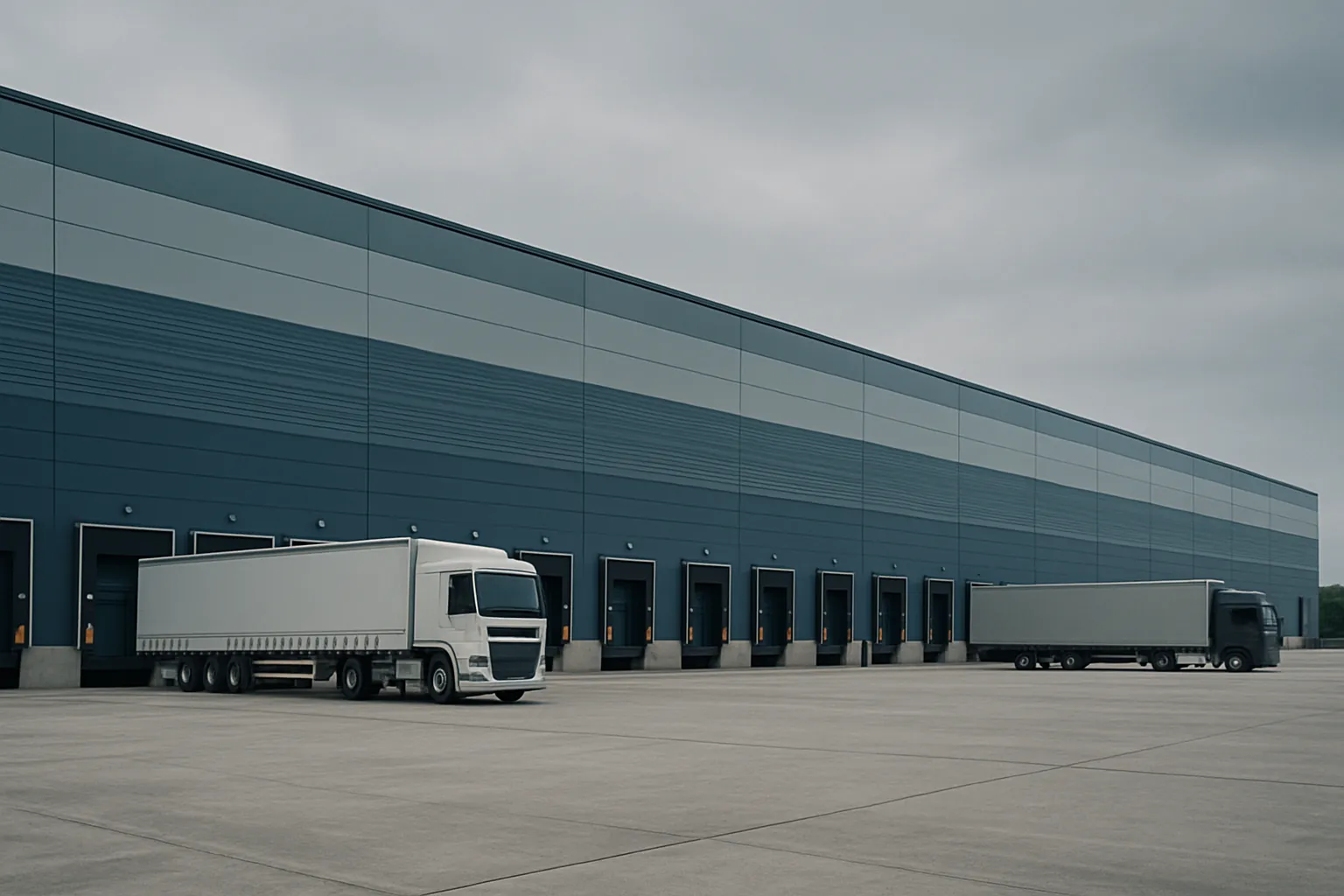
Big-box and distribution warehouse finance
Funding for large single-let distribution sheds let to third-party logistics operators and national retailers.

Funding big-box distribution
A big-box distribution warehouse is a large single-let industrial unit, typically 100,000 square feet and above, built to a high specification with deep yards, high eaves and dock-level loading. It is usually let on a single lease to one occupier, most often a third-party logistics operator, a national retailer or a manufacturer running a regional or national distribution hub.
These assets sit at the prime end of the market and trade on the strength of their location, lease length and tenant covenant. Because one tenant carries the whole income, lenders and investors focus closely on the untaken risk at lease events, the residual specification of the building and the depth of occupier demand in the local market if the unit ever falls vacant. A commercial mortgage on a big-box shed is sized against that income and the loan to value (LTV) the lender will support.
What we fund
- Single-let units of 100,000 sq ft and above with one occupier
- Cross-dock and regional distribution centres for 3PLs and retailers
- High-bay units with 12 metre to 18 metre clear internal height
- Deep secure yards, dock and level-access loading, strong power supply
- Prime and core locations on the motorway and trunk-road network
Indicative terms
- Typical lot size£10m to £150m and above
- Purchase LTVUp to ~70%
- Development LTCUp to ~65%
- Typical lease / income10 to 20 year single-let income
Indicative only. Terms vary by lender, asset and borrower and are not an offer of finance.
Commercial mortgages for big-box distribution warehouses
We arrange commercial mortgages and finance across the full life of a big-box industrial unit. For a stabilised warehouse with a long lease in place we source an investment commercial mortgage and term debt priced off the covenant, the unexpired term and the loan to value (LTV). Where there is a short lease, a vacant unit or a lease event approaching we arrange bridging to buy time to re-let or restructure income. For new schemes we put development finance in place against build cost and gross development value, then move clients onto a longer term commercial mortgage once the building is let and the income is proven. We act as arranger and introducer, not as a lender.
Which lenders finance big-box sheds
Senior banks, insurers and debt funds are active in this class because the single-let income is simple and the assets are liquid. Underwriting centres on the tenant covenant, the unexpired lease term and the rent against open market levels, with attention to break clauses and the reletting story if the single tenant leaves. Lenders look closely at the residual quality of the building, its eaves height, yard depth and power, since these decide how easily the warehouse can be relet to another logistics occupier and how much loan to value they will advance.
The big-box distribution market
National prime big-box rent reached £11.90 per sq ft in June 2025, up 5.2 percent year on year according to Colliers, supported by tightening supply as development completions fell to around 16m sq ft in 2025, the lowest since 2018 on Knight Frank figures. Prime distribution yields held at 5.00 to 5.25 percent in December 2025 per Knight Frank, with secondary around 6.00 percent. Take-up was around 40.8m sq ft in 2025 on a 50,000 sq ft and above basis per Knight Frank, and 33.05m sq ft for big-box units of 100,000 sq ft and above per Savills, while vacancy sat near 7.5 percent on the Knight Frank 50,000 sq ft and above measure, above the 4.6 percent ten-year average.
Finance that suits this asset class
- Purchase and investment financeAcquiring a let big-box asset on the strength of its income.
- Development financeFunding new distribution schemes against cost and end value.
- Term loansLonger hold debt once the unit is let and income is proven.
- Bridging financeShort term cover around lease events and vacant possession.
Useful calculators
Related guides
Fund a big-box distribution deal
A view on fundability within one working day.
How much can you borrow against a big-box distribution warehouse?
Borrowing on a let big-box distribution warehouse is driven by the income the building produces and the loan to value (LTV) a lender will support against it. For a stabilised single-let unit with a long lease in place, we typically arrange a commercial mortgage up to around 70 percent LTV, which on a 100,000 sq ft and above shed valued in the tens of millions still represents a large advance per square foot.
The exact amount turns on the tenant covenant, the unexpired lease term and how the passing rent compares with open market levels. A strong national occupier on a long lease supports the top of the range, while a short term or a weaker covenant pulls the loan to value back. We size the facility so it leaves comfortable headroom on the rental income covering interest, which lenders test closely on a single-let asset where one tenant carries the whole rent roll.
Beyond the income, lenders also look at the lot size and the depth of the buyer market. A prime big-box shed at the larger end, valued in the tens of millions, draws senior banks, insurers and debt funds, which keeps pricing competitive and the loan to value firm. We match the deal to the lenders most active at that lot size so the commercial mortgage is sized on a realistic read of both the income and the value.
What deposit and LTV apply to a single-let shed?
On a let big-box industrial unit most lenders advance up to around 70 percent loan to value, so the working assumption is a deposit of about 30 percent of value. A prime building with deep yards, high eaves and a long lease to a logistics operator or national retailer can reach the top of that band, while a unit with a lease event approaching or a softer location sits lower.
Development is sized differently. New big-box schemes are funded against cost rather than value, usually up to around 65 percent loan to cost, with the developer funding the balance through equity and any land value already held. We map the deposit or equity requirement at the outset so clients know what cash is needed before they commit to a purchase or a build.
What rates and terms can you expect on a big-box mortgage?
Pricing on a big-box distribution warehouse reflects the simplicity and liquidity of single-let logistics income. Investment commercial mortgages on prime stock with a strong covenant tend to price keenly against the wider commercial market, with the rate set off the covenant, the unexpired term and the loan to value. Secondary stock or shorter leases carry a margin premium to reflect the reletting risk.
Investment terms commonly run five to ten years, often with the option to fix the rate for certainty of cost over the hold. Development facilities are shorter and roll for the build and letting period before clients move onto a longer term commercial mortgage. We present the income and covenant in the way lenders underwrite it so the rate and term offered reflect the real strength of the asset.
Amortisation is a further lever. On a long lease to a strong covenant, some lenders will offer interest-only or low amortisation, which keeps the cash cost down over the hold, while a shorter lease or weaker tenant tends to come with more amortisation to reduce the loan to value over time. We weigh the rate, the term and the amortisation together so the structure suits how long the investor intends to hold the warehouse.
What do lenders look for in a big-box deal?
Lenders concentrate on the single tenant because that occupier carries the entire income. They weigh the covenant strength, the unexpired lease term, any break clauses and how the passing rent sits against open market levels. The reletting story matters just as much, so they assess the residual specification of the warehouse, its eaves height, yard depth and power supply, since these decide how readily the unit would re-let to another logistics occupier if it fell vacant.
Location on the motorway and trunk-road network is central, as depth of occupier demand in the local catchment underpins both the rental income and the exit. We assemble the covenant, lease and building evidence so the lender can size the loan to value confidently against a clear view of the risk at lease events.
Liquidity is the backstop lenders rely on. Big-box distribution stock trades readily because the single-let income is simple, which is why senior banks, insurers and debt funds all lend against it. Vacancy sat near 7.5 percent on the Knight Frank 50,000 sq ft and above measure, above the 4.6 percent ten-year average, so lenders also gauge how the local catchment is absorbing space when they judge how quickly a vacant unit would re-let.
Can you refinance or remortgage a big-box distribution warehouse?
Yes. We refinance let big-box sheds onto a new investment commercial mortgage or term loan, commonly to release equity created by rental growth, to fix a rate for certainty over the hold, or to replace a maturing facility. The loan to value is reset against the current rent and value, so a shed where the rent has grown or the lease has been re-geared can support a larger advance than at the original purchase.
Timing the refinance matters on a single-let asset, because the unexpired lease term drives both the rate and the loan to value a lender will offer. A remortgage shortly after a lease re-gear, when the unexpired term is long, generally secures keener pricing than one taken with a lease event approaching. Where a unit is heading toward vacancy we arrange bridging to buy time to re-let, then move the client onto a fresh term commercial mortgage once income is back in place.
Prime distribution yields held at 5.00 to 5.25 percent in December 2025 per Knight Frank, with secondary around 6.00 percent, which frames the value a refinance is sized against. We present the income, the covenant and the unexpired term so the new facility reflects the real strength of the asset at the point of refinance.
Worked example: prime single-let distribution shed
Take an illustrative purchase of a 250,000 sq ft distribution warehouse let to a national logistics operator on a fifteen year lease, priced at £40m. At 65 percent loan to value the commercial mortgage would be around £26m, with the investor funding a deposit of about £14m. This is a simplified example, not a quote, and any real facility would be sized on the specific covenant, lease and valuation.
On a stabilised prime asset of this kind the rate might sit in a low single-digit margin over the relevant reference rate, on a term of around seven years. The long unexpired lease and the strength of the tenant covenant support the loan to value and give the lender comfort that rental income covers interest with room to spare. If the passing rent on the shed were, say, £11.90 per sq ft in line with national prime big-box levels in June 2025 per Colliers, the income on 250,000 sq ft would run close to £3m a year, comfortably ahead of the interest on a £26m loan.
Now take the same shed as a development. If the build cost were £30m against a £40m end value, a development facility at 65 percent loan to cost would advance around £19.5m, with the developer funding the balance through equity and any land value already held. Once the warehouse is built and let to the logistics operator, the client moves off shorter development pricing onto a longer term commercial mortgage sized against the proven income.
Toward the end of the hold the investor could remortgage onto a fresh term loan, refinance to release equity created by rental growth, or sell the let asset. Each route turns on the unexpired term remaining at that point and the yield the market will pay for single-let logistics income, which prime distribution stock attracted at 5.00 to 5.25 percent in December 2025 per Knight Frank.
Illustrative worked example only. Figures vary by lender, asset and borrower and are not an offer of finance.
Frequently asked questions
Can you get a mortgage on a big-box distribution warehouse?
Yes. A big-box distribution warehouse can be financed with a commercial mortgage. For a stabilised single-let unit we typically arrange purchase finance up to around 70 percent loan to value (LTV), with the exact figure driven by the tenant covenant and the unexpired lease term, and we structure the loan for an investor landlord or an owner-occupier as appropriate.
What deposit or LTV do I need for a big-box warehouse?
On a let big-box industrial unit lenders usually advance up to around 70 percent loan to value, so a deposit of around 30 percent is the working assumption. A strong covenant and a long unexpired lease can push LTV toward the top of the range, while a short term or weaker tenant pulls it down.
Can I refinance a big-box distribution warehouse?
Yes. We refinance let big-box sheds onto a new investment commercial mortgage or term loan, often to release equity, fix a rate or replace a maturing facility, with the loan to value set against the current rent and value.
How does the unexpired lease term affect a big-box mortgage?
On a single-let big-box warehouse the unexpired lease term is one of the biggest drivers of both the rate and the loan to value, because one tenant carries the whole rental income. A long unexpired term to a strong covenant supports keener pricing and a higher LTV, while a lease event approaching pulls both back and may point toward bridging until the income is re-geared or the unit re-let.
Funding a big-box distribution asset?
Tell us about the deal and we will come back with a view on fundability and likely terms.