1
Logistics locations
A warehouse and logistics market report for Rutland, with the finance we arrange across 1 logistics location in the county.
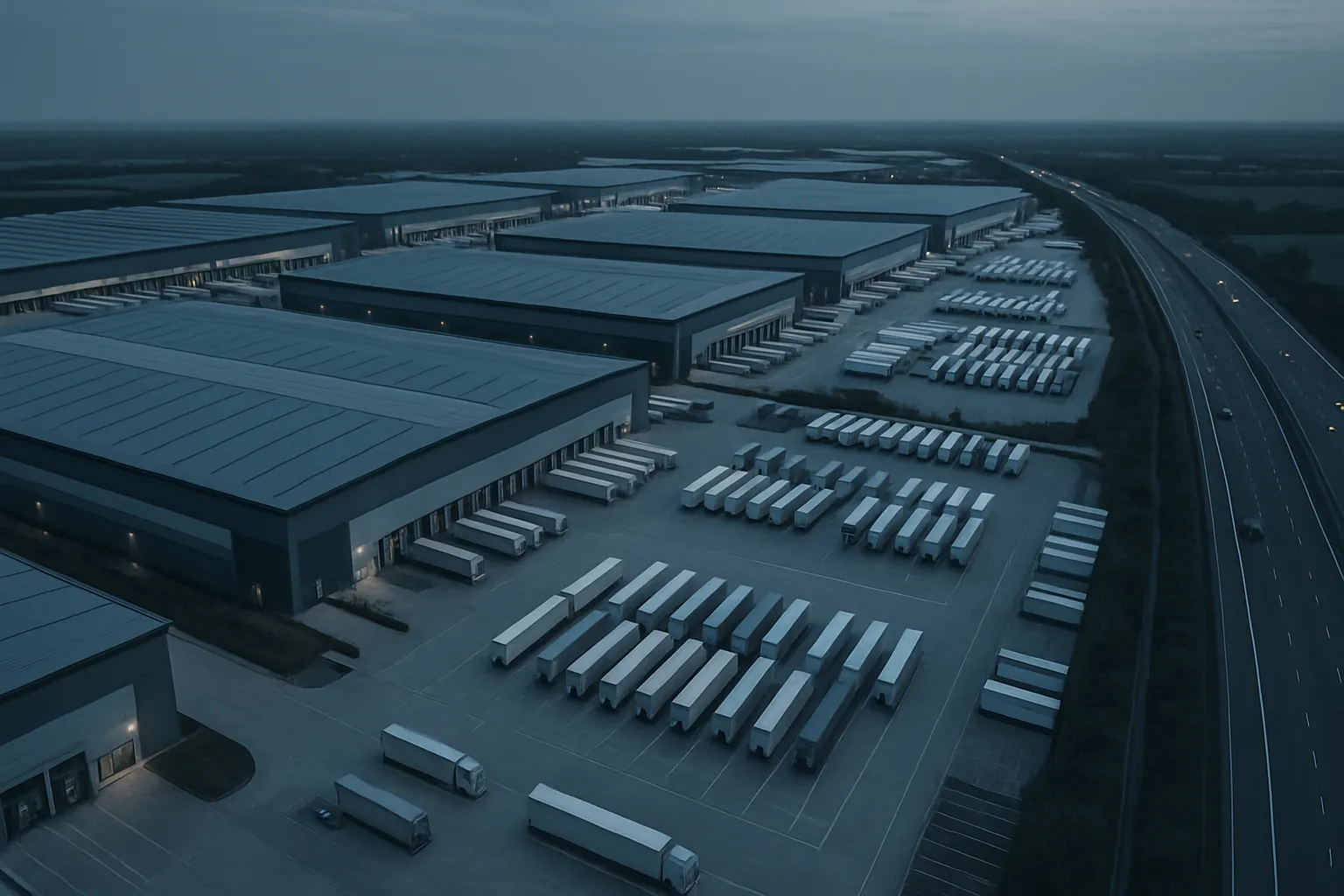
Rutland is England's smallest historic county, and its industrial market is correspondingly modest. There is no motorway, no rail freight terminal and no freeport, and the county's road access depends on the A606 and A6003 linking it to the wider East Midlands network and to the A1 corridor beyond its borders. Industrial demand here is local and small-scale, serving the towns of Oakham and Uppingham and the surrounding rural economy rather than national distribution.
Rutland sits within the East Midlands region, and so shares in the regional context set by Cushman and Wakefield, but it does not participate in the big-box logistics market that defines neighbouring Leicestershire and Northamptonshire. Its industrial stock is limited, oriented toward light industrial, trade counter and local service uses, and its values are driven by scarcity of supply within a constrained, predominantly rural and residential planning environment.
Rutland's industrial occupier base is local rather than national. Without motorway frontage, rail connectivity or freeport status, the county does not attract the large distribution and manufacturing requirements that gravitate to the strategic corridors of the wider region. Demand instead comes from local businesses, trade occupiers and small manufacturers serving Oakham, Uppingham and the surrounding villages, with units typically smaller and multi-let.
This profile gives the market a different character from its neighbours. The limited supply of industrial land in a county prized for its landscape and rural setting means that what stock exists tends to be tightly held, and rents for the better small units can be firm relative to the modest scale of the buildings. Demand depth for any individual asset, however, is shallow, which lenders weigh when assessing reletting risk.
As part of the East Midlands, Rutland sits under regional metrics of prime rents at £10.50/sq ft, a prime yield of 5.15 percent, take-up of 3.98m sq ft and availability of 16.25m sq ft in Cushman and Wakefield's Q2 2025 Marketbeat. These figures are driven by the big-box markets to the west and overstate what is achievable in Rutland itself, where the absence of strategic infrastructure keeps the county outside the institutional logistics market.
The national backdrop, prime big-box rents of around £11.90/sq ft in June 2025 up 5.2 percent per Colliers, prime yields of 5.00 to 5.25 percent and secondary nearer 6 percent per Knight Frank, and a 2025 development pipeline at its lowest since 2018, has limited direct relevance to a market of Rutland's scale. What matters more locally is the persistent scarcity of small industrial supply, which supports occupancy and values for the limited stock that exists.
We arrange debt across the life cycle of industrial property in Rutland and work as an introducer to the lending market rather than as a principal. Given the county's small-scale, local market, most activity involves single units or small multi-let estates, and we place senior investment loans where pricing follows covenant, lease terms and the reletting prospects for what is a shallow occupier pool.
For acquisitions that need to complete quickly, or for the refurbishment and repositioning of older units, we arrange bridging finance. Development opportunities are limited by planning and land scarcity, but where small schemes come forward we can structure development facilities sized on cost and value and drawn against a monitored programme, before refinancing into longer-term investment debt on the stabilised income. Because demand is local and depth is limited, we are careful to match Rutland assets to lenders comfortable with smaller lot sizes and regional, rather than national, occupier markets.
Rutland will remain a small, local industrial market defined by scarcity rather than scale. The lack of motorway, rail freight and freeport infrastructure keeps it outside the institutional logistics sector that drives the rest of the East Midlands, and its values are sustained instead by limited supply within a tightly constrained rural planning environment. National rental trends have little direct bearing on a market of this size.
Finance is available for the county's smaller industrial lot sizes, but on terms that reflect a shallow occupier pool and limited demand depth. Well-located small units with credible tenants will attract reasonable debt; lenders will weigh reletting risk carefully given the local nature of demand, and leverage on more specialised or remote stock should be expected to be more conservative.
Market figures are East Midlands-level benchmarks attributed to Cushman & Wakefield (Marketbeat Logistics & Industrial, Q2 2025), used as regional context for Rutland rather than a county-specific measurement. National figures: VOA and the research houses as cited.
Each town carries its own logistics geography and regional market context.
Five products across the whole warehouse lifecycle.
We arrange funding to acquire let warehouse and industrial investment assets across the UK.
We arrange fast, short-term bridging to secure or reposition warehouse and industrial assets.
We arrange funding for ground-up logistics and industrial schemes and major refurbishment.
We arrange funding to carry a newly completed or part-let warehouse through to full occupancy.
We arrange long-term investment mortgages on stabilised, income-producing warehouse assets.
Every sub-type is underwritten differently. We know which lenders back each one.
Send us the outline and we will come back with a view on fundability and likely terms.