How much does it cost to buy a warehouse?
A warehouse is a commercial property used for storage and distribution, and buying one carries costs that go well beyond the headline asking price. The purchase

A warehouse is a commercial property used for storage and distribution, and buying one carries costs that go well beyond the headline asking price. The purchase price is only the starting figure. Layered on top are stamp duty, professional fees, a valuation, surveys and the deposit your lender expects you to put in, and each of these shapes the real cash you need to complete. We arrange the finance behind warehouse purchases across the UK, and as an introducer rather than a lender we sit on your side of the table and help you see the total cost before you commit.
This guide breaks down what it actually costs to buy a warehouse in the UK, from the price per square foot through to the one-off purchase costs and the ongoing outgoings once you own it. We look at how much money you need up front, what a large distribution shed costs compared with a small starter unit, and whether the numbers stack up for an owner-occupier running a business or an investor letting the space to a tenant. The aim is to give you a clear, honest picture so the budget you set is the budget the deal needs.
What does it cost to buy a warehouse in the UK?
The cost of buying a warehouse is driven first by location and size, then by the building's age, condition and specification. Across the UK, secondary and mid-box industrial space typically trades in a broad band per square foot, with prime distribution units in the logistics hotspots commanding a clear premium over older stock in weaker locations. A modern unit with good eaves height, level access and a strong energy rating will always cost more than a tired shed that needs work, because the buyer is paying for space that is ready to use and cheap to run.
The purchase price is rarely the whole story. On top of the price you should budget for stamp duty land tax, legal fees, a lender's valuation, a building survey and, where you are borrowing, arrangement and broker costs. As a rough guide, these purchase costs often add several percent to the price before you even hold the keys, which is why setting a realistic all-in figure at the outset matters more than fixating on the asking price alone.
We model the full cost of the deal before you offer, so the number you take to a seller reflects what you can genuinely complete on. That includes the finance, because the rate and term you secure feed directly into whether a given price is affordable month to month. It also includes a sensible allowance for any works the building needs on day one, since a unit bought cheaply but requiring a new roof or floor strengthening is not the bargain the price alone suggests.
How much does a 100,000 sq ft warehouse cost?
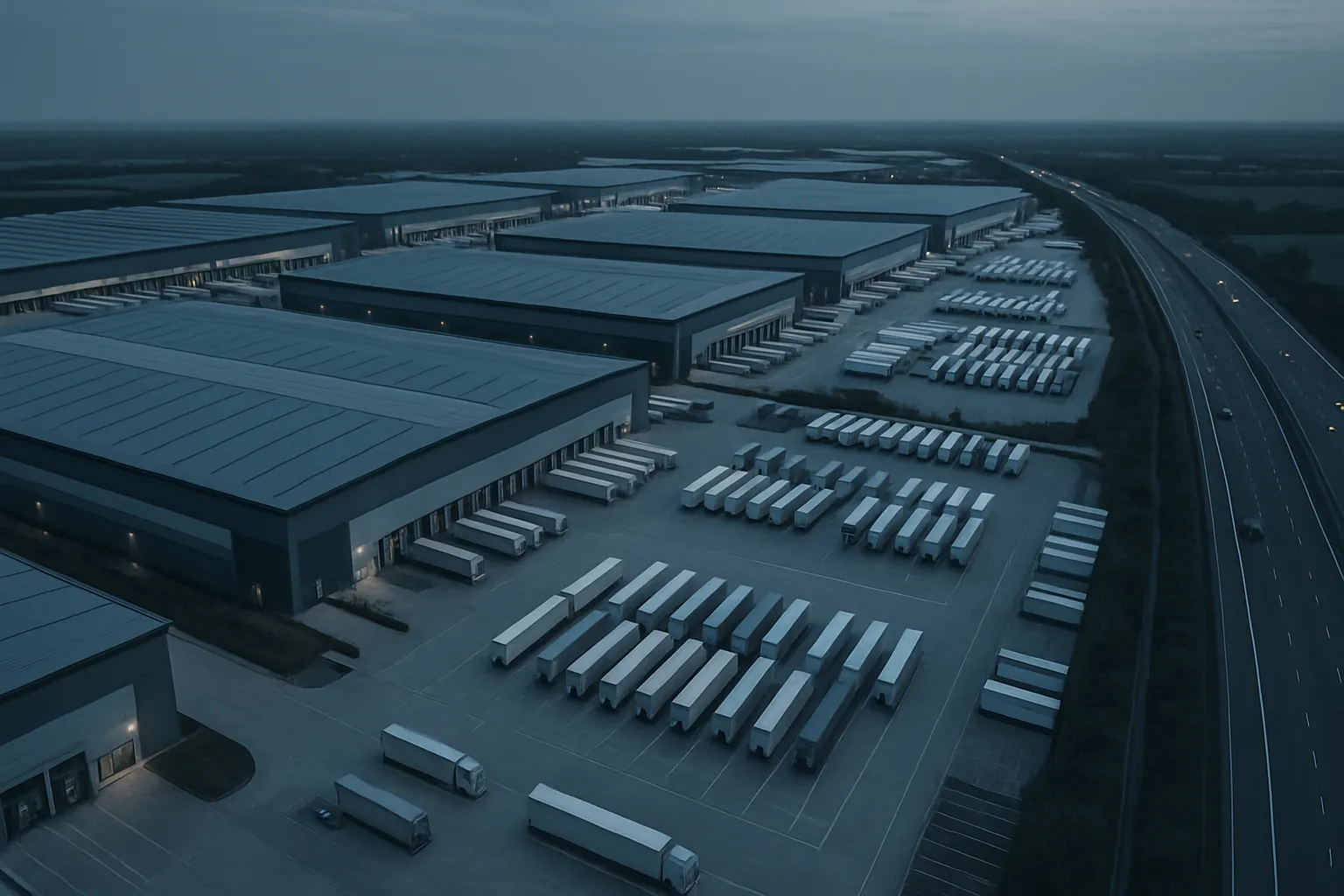
A 100,000 square foot warehouse is a large distribution-scale building, and its cost depends heavily on whether it is prime logistics space in a core location or secondary stock further from the motorway network. At a capital value per square foot typical of good modern industrial property, a unit of that size runs into many millions of pounds, and a prime distribution shed in a sought-after location will sit well above a comparable building in a weaker market.
For an investment buyer, the more useful way to price a building of this scale is by its rental income and the yield. If the unit is let to a tenant on a lease producing a known annual rent, the capital value is the rent divided by the market yield. A lower yield means a higher price for the same rent, which is why prime industrial assets, where yields are tight, change hands at strong capital values even when the rent looks modest against the price.
Small starter units sit at the other end of the scale entirely. A compact warehouse of a few thousand square feet aimed at a local trade occupier can be bought for a fraction of a large shed, which is why the question of cost has no single answer. Specification matters too within any size band, since a unit with high eaves, a strong floor slab, dock-level loading and a generous yard commands more than a basic box of the same footprint. We size the finance to the specific building and its income, not to a generic figure.
How much money do you need to buy a warehouse?
The cash you need to buy a warehouse is built from the deposit plus the purchase costs. On a commercial purchase, lenders typically advance up to around seventy to seventy-five percent of the value, which means a deposit of roughly twenty-five to thirty percent of the price from your own funds. On a building priced at one million pounds, that is somewhere in the region of two hundred and fifty to three hundred thousand pounds before any fees.
Stamp duty land tax is the next big line. Warehouses fall under the non-residential rates, which in England and Northern Ireland are zero percent on the slice up to 150,000 pounds, 2 percent on the slice from 150,000 to 250,000 pounds, and 5 percent on anything above 250,000 pounds. Scotland applies its own Land and Buildings Transaction Tax and Wales its own Land Transaction Tax, both with different bands, so the tax bill depends on where the warehouse sits.
Add legal fees, a building survey, the lender's valuation and your own working capital if you are fitting the space out, and the true cash requirement climbs well above the deposit alone. We set out every line of this before you proceed, so there are no surprises between offer and completion. For an owner-occupier the calculation also has to leave room for the move, the fit-out and any racking, shelving or plant the operation needs to start trading from the unit on day one.
Is buying a warehouse a worthwhile investment?
Whether buying a warehouse is worth it depends on what you want from it. For an investor, a let warehouse can be a sound investment because industrial property has delivered strong rental income growth and held its value better than many other commercial sectors, driven by the demand from logistics and distribution occupiers. A single-let unit on a long lease to a solid tenant produces a predictable income, and the yield tells you the return that income represents against the price paid.
Profitability turns on the gap between the rent the building earns and the cost of holding it, including the mortgage, maintenance, insurance and any periods the unit sits empty between tenants. A warehouse let at a rent that comfortably covers the finance and leaves a margin is profitable; one bought at too keen a price for the rent it commands is not. The valuation and the strength of the lease are therefore central to the decision.
For an owner-occupier the maths is different but no less compelling. Buying the warehouse your business trades from converts rent you would otherwise pay a landlord into an asset you own, and over a long hold the building can appreciate while the mortgage reduces. We help both kinds of buyer test whether the numbers genuinely work before committing capital.
What are the ongoing costs of owning a warehouse?
Owning a warehouse brings running costs that need budgeting for alongside the purchase. Business rates are usually the largest, charged on the building's rateable value, though smaller units may qualify for relief. Buildings insurance, repairs and maintenance, and the cost of keeping the unit secure and compliant all sit on top, and where you hold the property as an investment you also carry the risk of void periods when no tenant is paying rent.
Energy performance feeds into the running cost too. A warehouse with a poor energy rating costs more to heat and light, and under the minimum energy efficiency standards it may be unlettable until improved, which is both an operating cost and a capital one. A modern, well-insulated unit with a strong rating keeps these outgoings down and protects the value of the asset.
Where you have borrowed, the mortgage repayment is the recurring cost that matters most. On a commercial mortgage the rate and whether the loan is on interest only or repayment terms determine the monthly outgoing, and the right structure keeps the building comfortably affordable across the cycle. We arrange the finance with these ongoing costs in mind, not just the day of completion.
How do the purchase costs break down on a warehouse?
Beyond the price, the one-off costs of buying a warehouse fall into a handful of predictable lines, and seeing them itemised stops the budget drifting. Stamp duty land tax is usually the largest single item on a higher-value building, calculated in bands at zero percent up to 150,000 pounds, 2 percent from 150,000 to 250,000 pounds and 5 percent above that in England and Northern Ireland. On a unit at 750,000 pounds, that produces a four-figure-into-five-figure tax bill that has to be funded in cash on completion.
Legal fees cover the conveyancing, the searches and the title work, and they are higher on commercial property than on a house because the title and the lease, where there is one, are more involved. A lender's valuation is charged to confirm the security is worth what you are paying, and on a large industrial building it is more than a token fee. A full building survey by a chartered surveyor is a separate and worthwhile cost, since it tells you the condition of the structure, the roof and the floor slab before you commit.
Where you borrow, there are finance costs on top: a lender arrangement fee, often charged as a percentage of the loan, and any broker fee. VAT may be payable on the price itself where the seller has opted to tax the building, which can be a large temporary cash outlay even where it is later recovered. There are also smaller but real items such as land registry fees and the cost of any specialist reports, for instance an environmental search or an asbestos survey on an older unit, each of which is modest alone but adds up across the deal. We total all of these into a single all-in figure so the deposit is never mistaken for the full cost of buying.
How does finance affect what a warehouse really costs?
The way a warehouse is financed changes its real cost as much as the price does, because the rate, the term and the loan structure determine what the building costs you to hold month after month. A commercial mortgage at a competitive rate over a long term spreads the cost thinly and keeps the monthly outgoing affordable, while a short-term facility such as bridging carries a higher monthly cost and is meant only to get you to a longer-term loan. Matching the right finance to the purchase is therefore central to what the deal actually costs.
The loan to value sets how much of the price you fund from borrowing and how much from your own deposit. A higher loan to value reduces the cash you put in but increases the monthly repayment, while a lower one does the reverse. There is a genuine trade-off here between preserving cash and minimising the ongoing cost, and the right balance depends on whether you are an owner-occupier protecting working capital or an investor sizing the loan against the rental income the unit produces.
We compare the whole market on the total cost of finance rather than the headline rate alone, because a low rate paired with a heavy arrangement fee can work out dearer than a slightly higher rate with no fee. For both an owner-occupier and an investor, getting that full-cost picture right is what turns an affordable-looking price into a genuinely affordable purchase.
The cost of buying a warehouse: common questions
Is buying a warehouse profitable?
A let warehouse can be profitable when the rent comfortably exceeds the cost of holding it, including the mortgage, maintenance, insurance and any void periods. Industrial property has delivered strong rental growth on the back of logistics demand, so a well-located unit on a sound lease to a solid tenant tends to produce a reliable income. Profit ultimately depends on buying at a sensible price for the rent the building commands.
Is it worth buying a warehouse?
For an investor, a warehouse is worth buying where the yield and lease support a return after costs. For an owner-occupier, buying converts rent paid to a landlord into an owned asset that can appreciate while the mortgage reduces. In both cases it comes down to the price against the income or savings, the condition of the building and the finance you secure, which is why we model the full deal before you commit.
How much does a 100,000 sq ft warehouse cost?
A 100,000 square foot warehouse is distribution-scale and runs into several million pounds, with prime logistics units in core locations costing well above secondary stock further from the motorway network. For an investment buyer the clearest way to price it is the annual rent divided by the market yield, since a tight yield on a prime asset produces a high capital value even where the rent looks modest against the price.
How much money do you need to start a warehouse?
To buy a warehouse you typically need a deposit of around twenty-five to thirty percent of the price, since lenders advance up to roughly seventy to seventy-five percent of value, plus stamp duty land tax and the legal, valuation and survey fees. On a one million pound unit that means a deposit of roughly 250,000 to 300,000 pounds before costs, with extra working capital needed if you are fitting out the space to trade from it.
Ready to talk about a real deal?
Send us the warehouse and we will come back with a view on fundability and likely terms within one working day.